what does it mean to gasp for air?

Waking upward in the middle of the night gasping for air tin be a distressing experience. If you lot frequently feel such episodes, it's important to get to the root of the event. Still, there are many unlike underlying causes that could be contributing to this experience.
With proper assessment, the causes are ordinarily easy to place and manage. However, if left untreated, some medical conditions that nowadays with this symptom can prove to be fatal. It is important to pay attention to your sleep patterns and consult with your healthcare provider if yous are consistently wake up over the course of the night due to lack of air.
1. Stress
Sometimes, the physical symptom of waking up in the heart of the dark and feeling out of breath has a psychological cause. When a person is under extreme stress or is experiencing anxiety, it is very possible to suddenly wake up in the heart of the night with excessive sweating, rapid heartbeat or shortness of breath.
This can be caused by a bright nightmare — or, in severe cases, it is possible to feel a panic set on while sleeping. Episodes of panic at night typically only last a few minutes, but they can exist quite disruptive to sleep patterns. If frequent waking and shortness of breath correlates with your stress levels, consider talking with a mental wellness professional to discuss methods of coping and stress relief.
2. Mail-nasal Drip
For those prone to nasal allergies or bad nasal colds, post nasal drip may be a familiar discomfort. While sleeping, nasal secretions can migrate down to the throat and temporarily cake the airway. When the encephalon senses that the airway is obstructed and oxygen cannot easily period to the lungs, it sends signals to the chest muscles to cough and gasp for air.
Thus, people with post-nasal drip may wake up feeling like they are suffocating. Post nasal drip tin can usually be alleviated with antihistamines or nighttime cold medicine. If this becomes a chronic trouble, consider speaking with an ear, olfactory organ, and pharynx (ENT) specialist for more information.
3. Asthma Flares
For those living with asthma, it is non uncommon to experience symptoms at dark or while already sleeping. During an asthma assail, the lining of the airway becomes bloated and thick mucus is produced, which tin can be the culprit of air shortage.
Nighttime triggers can include cold air, bedroom allergens, or consumption of certain foods or beverages near the finish of the day. Usually, asthma episodes are accompanied by wheezing and shortness of breath, and they can be life-threatening. Talk with your healthcare provider to detect out virtually preventative options.
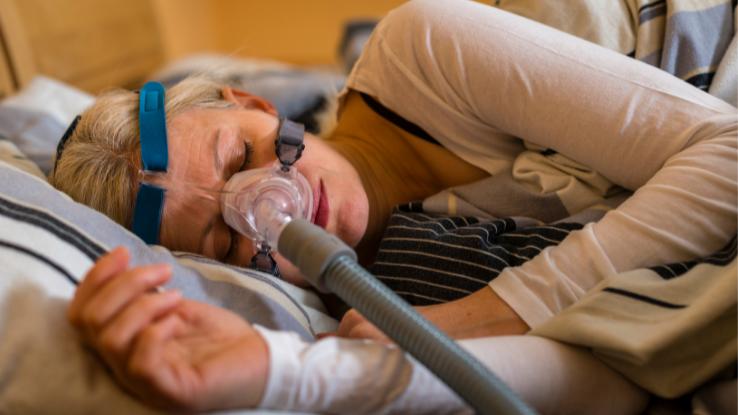
4. Sleep Apnea
Sleep apnea is a sleeping disorder that can cause people to wake up in the middle of slumber due to lack of oxygen. Slumber apnea can be related to improper signaling from the brain, which is meant to maintain one's breathing during sleep, or due to a physical obstruction of the airway. Airway obstruction tin can exist linked to backlog tissue or inflammation, enlarged tonsils, or the natural relaxation of the soft palate in the back of the pharynx during sleep.
Periods of 10 seconds or longer without active breathing pb to decreased claret oxygen levels and frequent waking. Be sure to consult with a healthcare professional if you suspect you lot accept slumber apnea, because if undiagnosed for long periods of time, this status can lead to astringent complications with the heart and lungs.
5. Eye Failure
Centre failure can cause shortness of breath that is worse when lying down and can wake a person up in the middle of the nighttime. This status is also known as paroxysmal nocturnal dyspnea, and it can exist fatal if left untreated.
Paroxysmal nocturnal dyspnea is unremarkably accompanied by decreased exercise tolerance — such as getting winded when climbing a flight of stairs — and ankle swelling, due to fluid buildup in the body every bit a result of weakened center function. If your waking episodes are related to heart failure symptoms, achieve out to your healthcare provider for tips on safe sleep habits.
6. Pulmonary Edema
Some other common cause for shortness of jiff during sleep is pulmonary edema. Pulmonary edema is characterized by an accumulation of excess fluid in the lungs in the modest lung sacs that makes breathing hard, and it is typically associated with heart failure or a respiratory infection. When an affected private is lying downward, shortness of jiff is increased, thus also increasing the gamble of waking upward gasping for air. Astute pulmonary edema, which is characterized by a sensation of drowning, is considered a medical emergency and care should be accessed immediately.
Next Steps
Disrupted slumber, in general, can lead to other medical conditions, such as depression, mood swings, and an inability to focus. Eventually, it can lower your quality of life and, in some cases, tin prove to be fatal. With all of this in mind, exist sure to consult with your doctor if you consistently wake up gasping for air.
Resource Links:
- "Post-nasal Drip" via ENT Health
- "Asthma and Slumber" via Sleep Foundation
- "Nocturnal panic attacks: What causes them?" via Mayo Clinic
- "Sleep Apnea" via National Middle, Lung, and Blood Establish
- "Slumber Apnea" via Mayo Dispensary
- "Pulmonary Edema" via Mayo Dispensary
- "Obstructive Sleep Apnea in Eye Failure: Review of Prevalence, Treatment with Continuous Positive Airway Pressure, and Prognosis" via Texas Center Establish Periodical, U.South. National Library of Medicine
- "Heart Failure Symptoms" via Michigan Medicine, University of Michigan
Source: https://www.symptomfind.com/healthy-living/reasons-why-you-wake-up-gasping-for-air?utm_content=params%3Ao%3D740013%26ad%3DdirN%26qo%3DserpIndex
0 Response to "what does it mean to gasp for air?"
Post a Comment